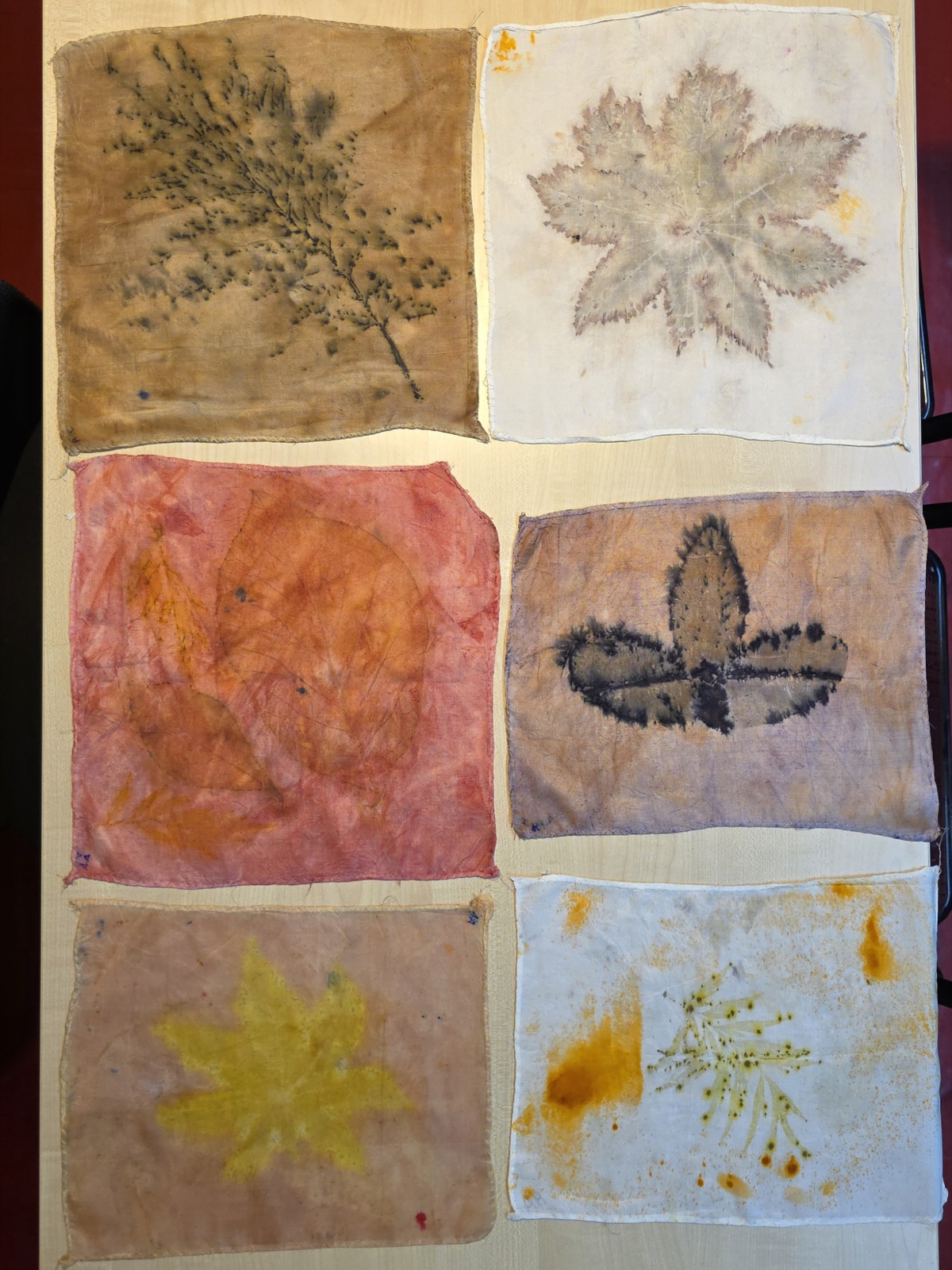
Eco printing turns leaves and flowers into prints on cloth. You lay plant material on mordanted fabric, roll it into a tight bundle, and steam it. The pigments and tannins in the leaves then transfer straight into the fibre. The Australian artist India Flint developed the eco-print technique during her master's research. Studios around the world now practise it, each with the plants that grow nearby. At RangMudra in Bengaluru, we teach it in a 3-hour eco printing workshop using leaves from the city's own trees.
The workshop at a glance
- Duration: 3 hours
- Price: ₹4,000 per person
- Level: beginner
- Group size: small, up to 5 people per session, so everyone gets hands-on time at the table
- You take home: a silk stole eco printed by you. We provide the silk.
- Materials: leaves and flowers vary with the season, and so does their colour. That's part of the craft.
- Where: RangMudra studio, Shankaraa Foundation, Kanakapura Main Road, next to Doddakalasandra Metro, Bengaluru
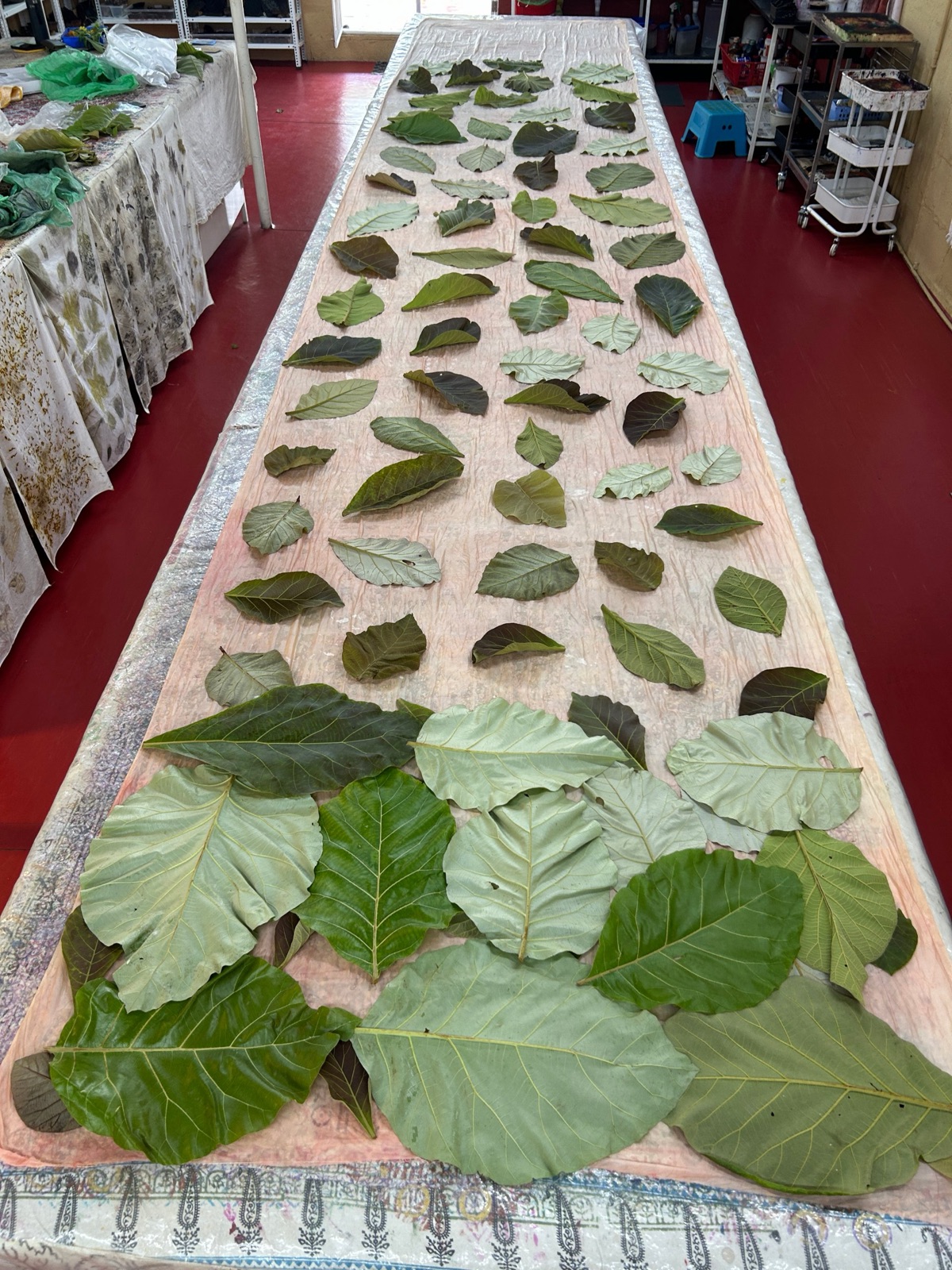
A Bengaluru leaf atlas: what 76 of our pieces were printed with
Most eco printed pieces in our collection are labelled with the leaves and the mordant or dye bath that made them. We went through all 76 eco printed pieces in the catalogue and counted. The result is a map of what actually prints well in Bengaluru, made from finished pieces rather than theory.
Leaves and flowers, by number of pieces:
- Silver oak: 17 pieces
- Castor: 16
- Teak: 16
- Indian almond: 10
- Eucalyptus: 6
- Gulmohar: 6
- Marigold petals: 5
- Cosmos flowers and leaves: 5
- African tulip: 3
- Croton: 3
- Plumeria flowers: 2
- Once each: guava leaves, casuarina sticks, blue pea flowers and rose
Almost all of these grow on Bengaluru's streets, in its parks and in back gardens. Gulmohar, African tulip and silver oak line many of the city's roads. Teak, castor and Indian almond are easy to find across the city. You don't need imported eucalyptus or maple to eco print. The city already has a palette.
Mordants: aluminium for clarity, iron for depth
A mordant is a metal salt that helps plant colour bond to fibre. It is also the biggest single lever on how a print looks. Across our 76 pieces:
- Aluminium acetate: 34 pieces. Aluminium keeps leaf colours clear and bright, so the yellows, greens and rusts read true.
- Iron acetate: 13 pieces. Iron "saddens" colour. Prints come out darker, often with crisp grey-black outlines and veins, and the same leaf can look like a different plant.
Some pieces go into a natural dye bath before printing. The leaf prints then sit on a coloured ground instead of white:
- Tea: 7 pieces
- Turmeric: 6
- Madder: 3
- Pomegranate peel: 2
- Annatto: 2
- Indigo: 1
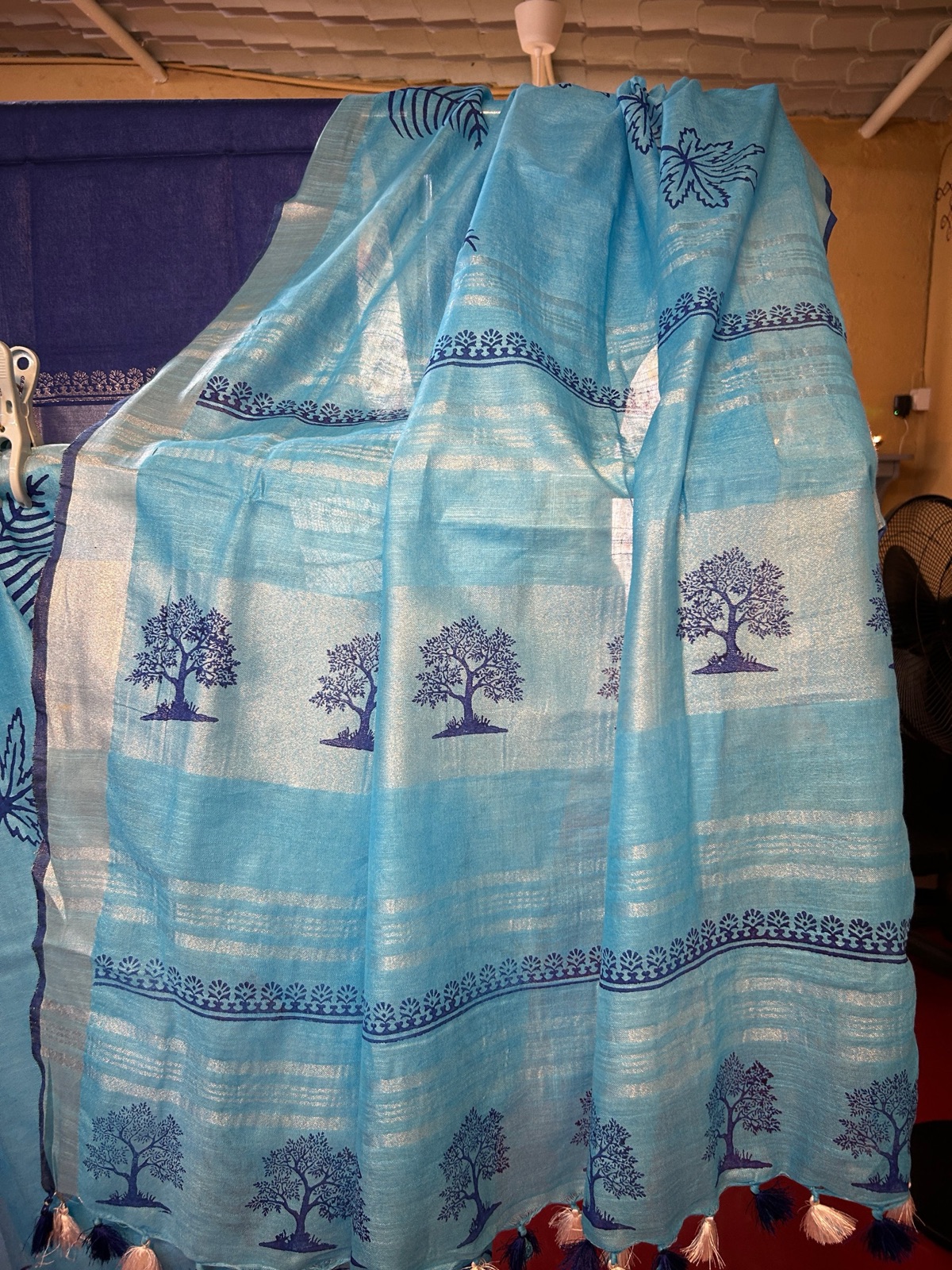
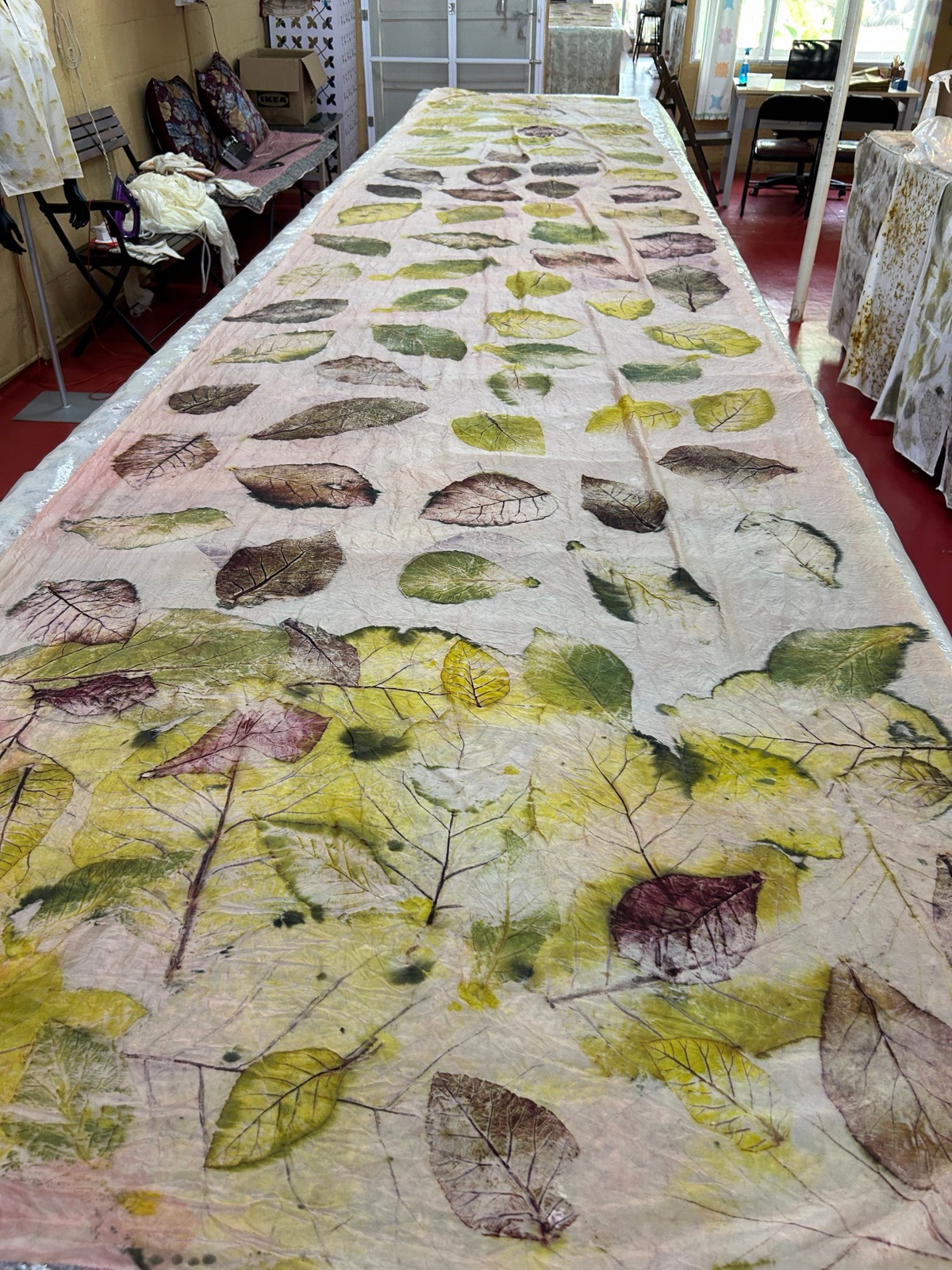
The pairings we come back to most are teak on aluminium acetate (11 pieces), silver oak on aluminium acetate (8) and castor, which we print on both aluminium and iron (6 pieces each). For one example of how the layers combine, see this mulberry silk stole: a turmeric dye bath, printed with castor and silver oak leaves.
Why we print on silk
Of our 76 pieces, 47 are mulberry silk and 7 more are chanderi silk. Others are linen (12), wool (2) and a locally woven banana fibre cloth (2). Silk and wool are protein fibres, and they take plant colour readily. Plant fibres like cotton and linen need more preparation to print as clearly. That's why the workshop uses a silk stole. Beginners get a vivid result on the first try.
Linen and banana fibre need more work, but they make striking garments. Our banana fibre blazer is eco printed with Indian almond leaves gathered around Bengaluru.
What happens in the 3 hours
1. Preparing the cloth. Your silk is readied with a mordant so it can hold the plant colour.
2. Choosing and laying the leaves. You pick from the season's leaves and flowers and arrange them face-down on the silk. This is your design. It will come out soft and painterly, never perfectly mirrored.
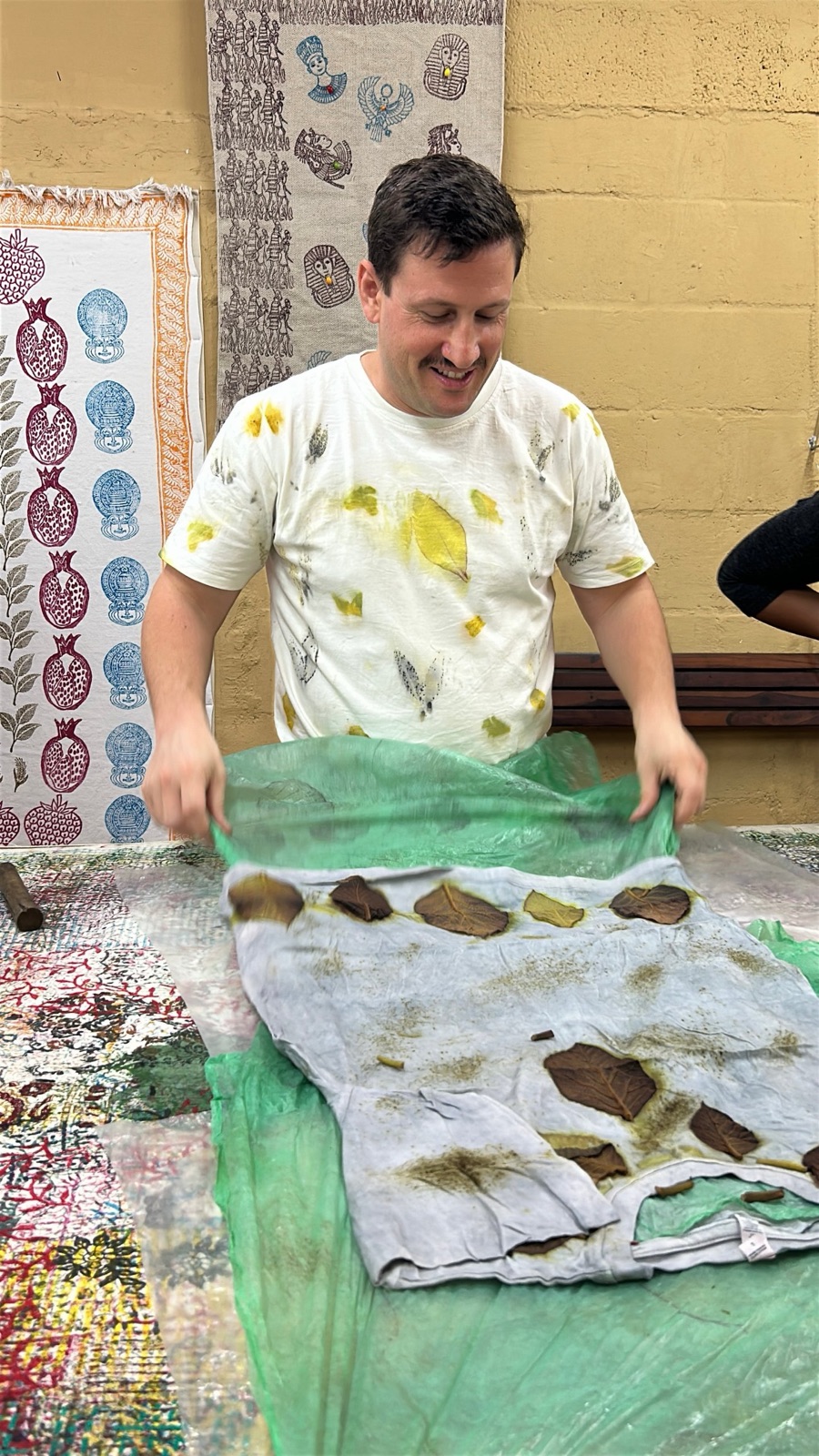
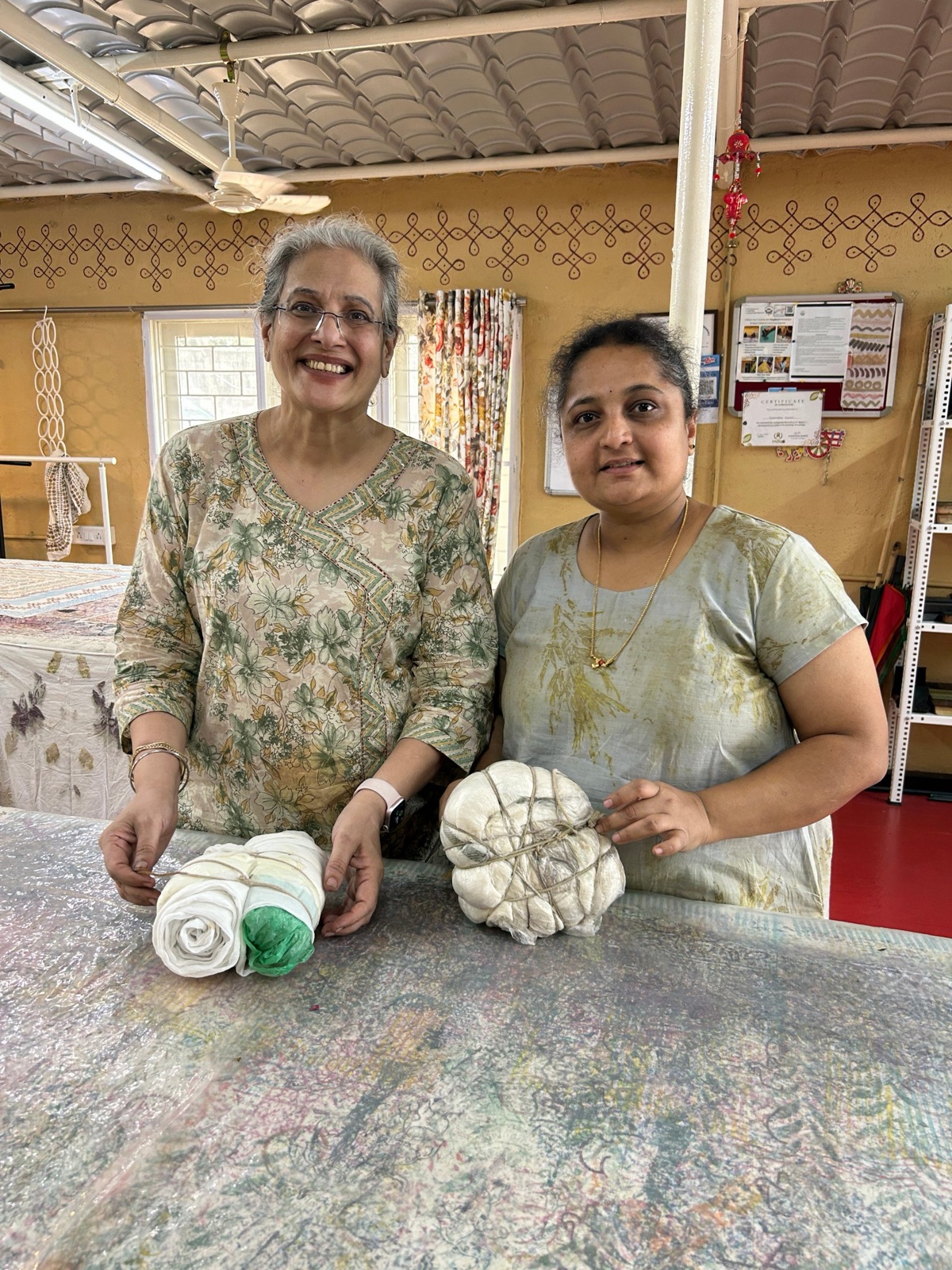
3. Bundling. The cloth is rolled tightly around a rod and bound with string. The tighter the bundle, the crisper the print.
4. Steaming. Heat and moisture release the pigments and tannins into the fibre.
5. The reveal. You unroll the bundle and see what the leaves have done. This is the moment everyone waits for.
Why no two prints are the same
The same tree prints differently through the year. Young leaves, old leaves, a dry spell and the monsoon all change how much colour a leaf holds. That's why our workshop notes say pigmentation varies with the season. Placement matters too: a leaf turned over, or a petal pressed against a stem, changes the result. Even the same leaf on the same bath will differ between two bundles.
Team Adyen, who did an eco printing session with us, put it simply: "Eco Printing workshop was very surprising to see prints from leafs and flowers."
Eco printing vs block printing
Both are taught at the studio, but they are very different crafts:
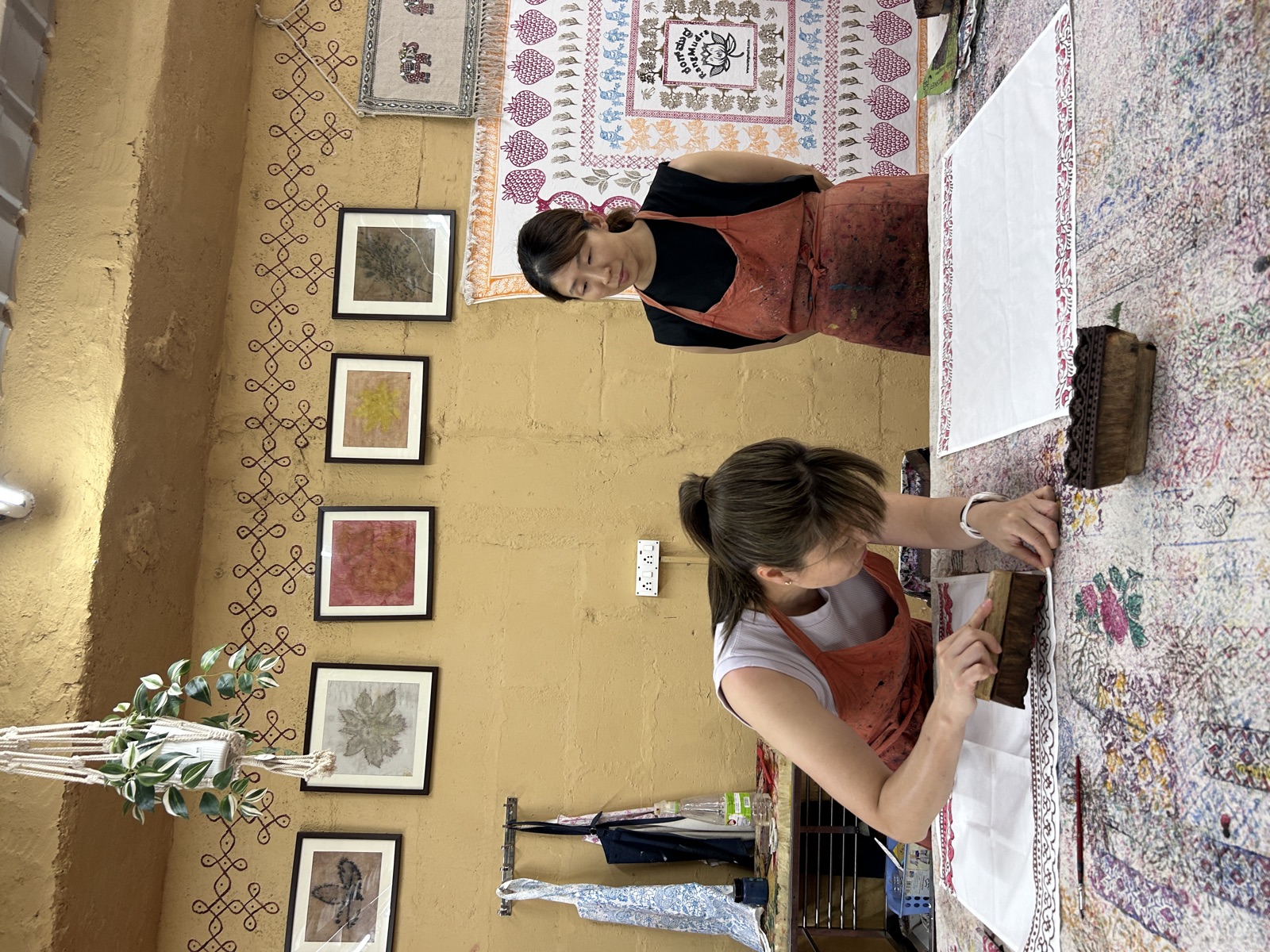
- Where the design comes from: in block printing it's a carved wooden block. In eco printing it's the leaf itself, with every vein and edge.
- Control: block printing lets you place every motif exactly. Eco printing is a collaboration with the plant, and you only see the result when you unroll.
- Time: our block printing workshop takes 90 minutes. Eco printing takes 3 hours because the bundle has to steam.
- Best for: block printing suits pattern lovers and gift makers. Eco printing suits anyone who loves plants, colour and a surprise.
Read our guide to the block printing workshop in Bangalore to compare.
Try it at home, or wear it
Want to try a first bundle in your kitchen? Our step-by-step guide to eco printing with leaves at home covers fabric, leaves, bundling and steaming. Once your piece is done, our care guide explains how to wash and store naturally dyed cloth so it lasts.
Frequently asked questions
Do I need experience? No. The workshop is for beginners, and the silk makes the first print forgiving.
What will I take home? A silk stole you eco printed yourself.
Which leaves will we use? Whatever is in season around Bengaluru. Silver oak, castor, teak and Indian almond are the studio's most used, but every month brings something different.
Will the colours fade? Plant colours mellow over time. They last longest when washed gently in cold water and dried in the shade.
Can our team do eco printing as a group activity? Yes. Teams like Adyen's have. See corporate team building in Bangalore or the corporate workshops.
How do I book? Book the eco printing workshop, message us on WhatsApp, or browse all experience workshops.