Hand block printing is one of the oldest ways of putting a pattern on cloth. A design is carved into a wooden block, the block is loaded with colour, and a person presses it onto fabric, one impression at a time. At RangMudra, our studio on Kanakapura Main Road in Bengaluru, you can learn it in a single sitting. This guide covers what happens in our 90-minute block printing workshop in Bangalore, what you take home, and how to get here.
The workshop at a glance
- Duration: 90 minutes
- Price: ₹2,500 per person
- Level: beginner. You don't need any art or craft experience.
- Group size: up to 15 people per session
- What you print: a cotton tote bag, plus your own clothes if you bring them (more on that below)
- Where: Workstation 2, Shankaraa Foundation, Kanakapura Main Road, next to Doddakalasandra Metro, Bengaluru 560062
- When: Monday to Saturday. Message us on WhatsApp or through the enquiry form to pick a slot.
What is hand block printing?
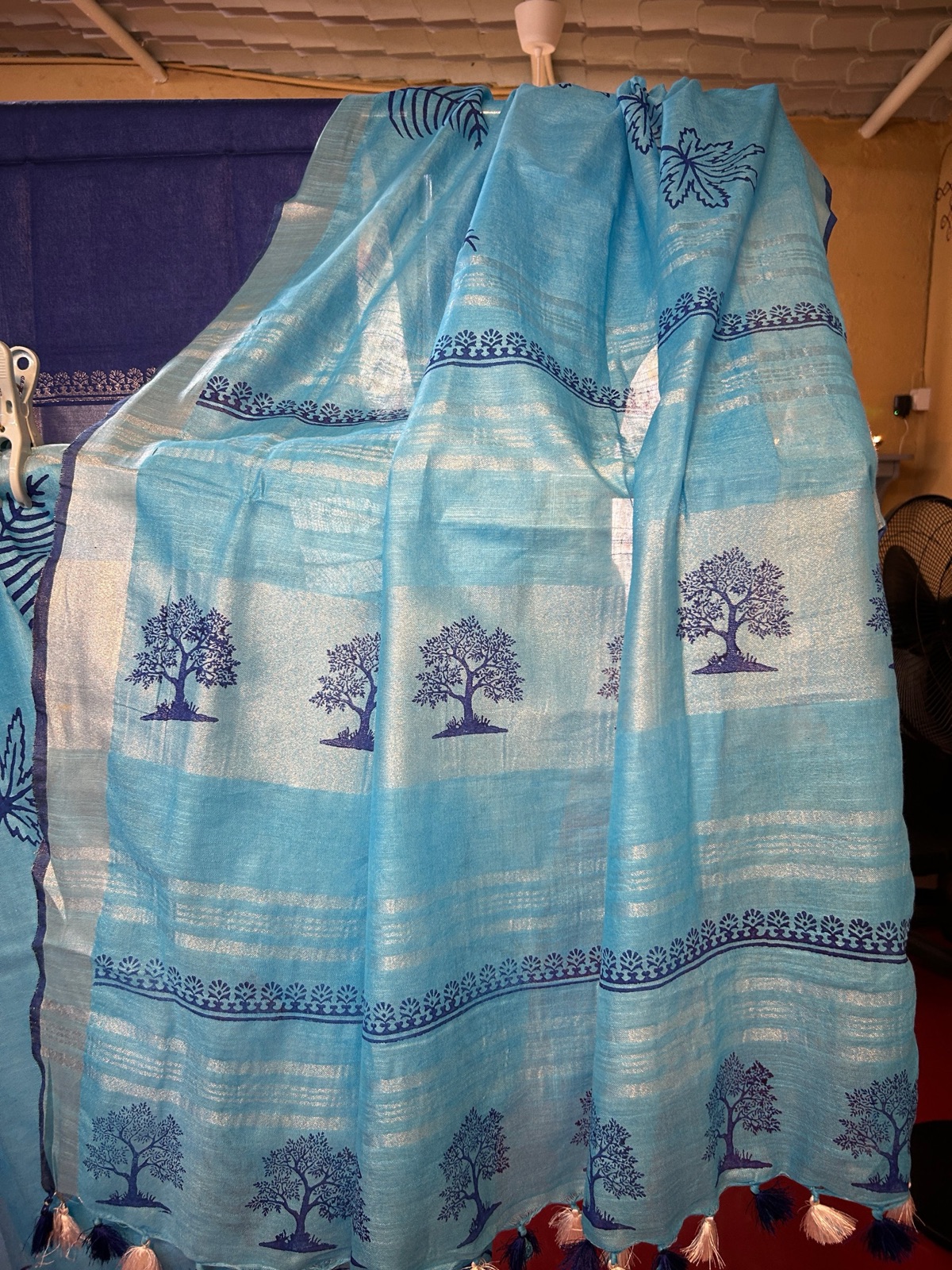
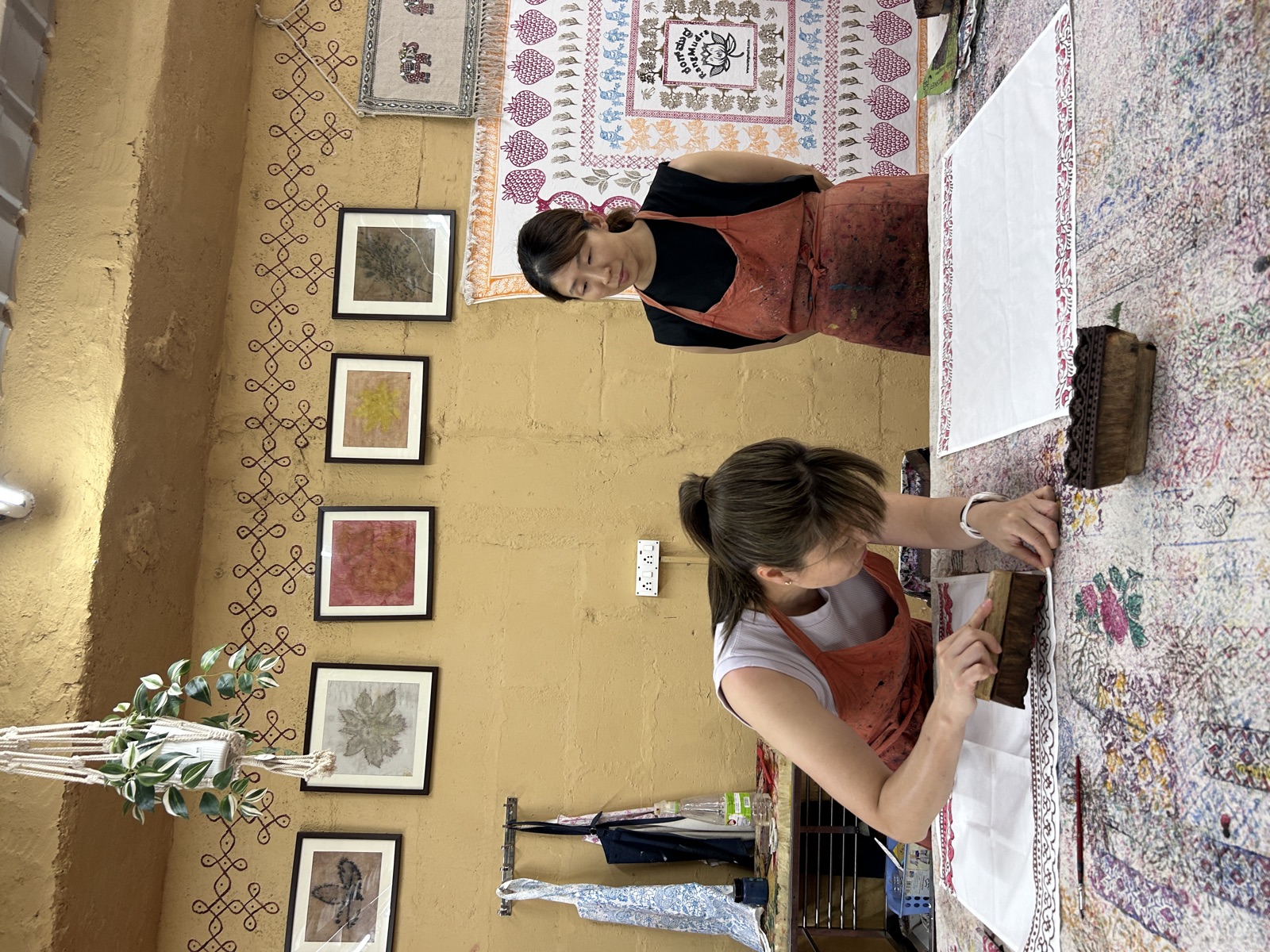
A block printer works with three things: a carved wooden block, a tray of colour, and a padded table. The padding lets the block bite evenly into the cloth. Every press leaves a slightly different impression, which is why hand printed cloth never looks machine-made.
India has printed cloth this way for many centuries. The Ashmolean Museum in Oxford holds more than 1,200 Indian block printed cotton fragments that were traded across the Indian Ocean and found in Egypt. Radiocarbon tests on a sample of them gave dates from roughly the 11th to the 17th century (Ruth Barnes, *Indian Block-Printed Textiles in Egypt*). Today, Rajasthan's two best-known printing towns are protected by Geographical Indication tags: Sanganeri hand block printing (2009) and Bagru hand block print (2011). Bagru printers still use natural mordants such as harda and alum.
Our name carries the same idea. Rang means colour and Mudra means the impression of a hand. You can read more about the studio on our About page.
What happens in the 90 minutes
1. The story of the craft. We start with an overview of block printing and its main styles, so you know what you are looking at when you pick up a block.
2. Choosing your blocks. You choose from the studio's collection of hand-carved blocks: florals, paisleys, borders and geometric motifs.
3. Learning the press. We show you how to load a block evenly, line it up, and press so the whole design transfers.
4. Printing your tote bag. You design and print your own cotton tote.
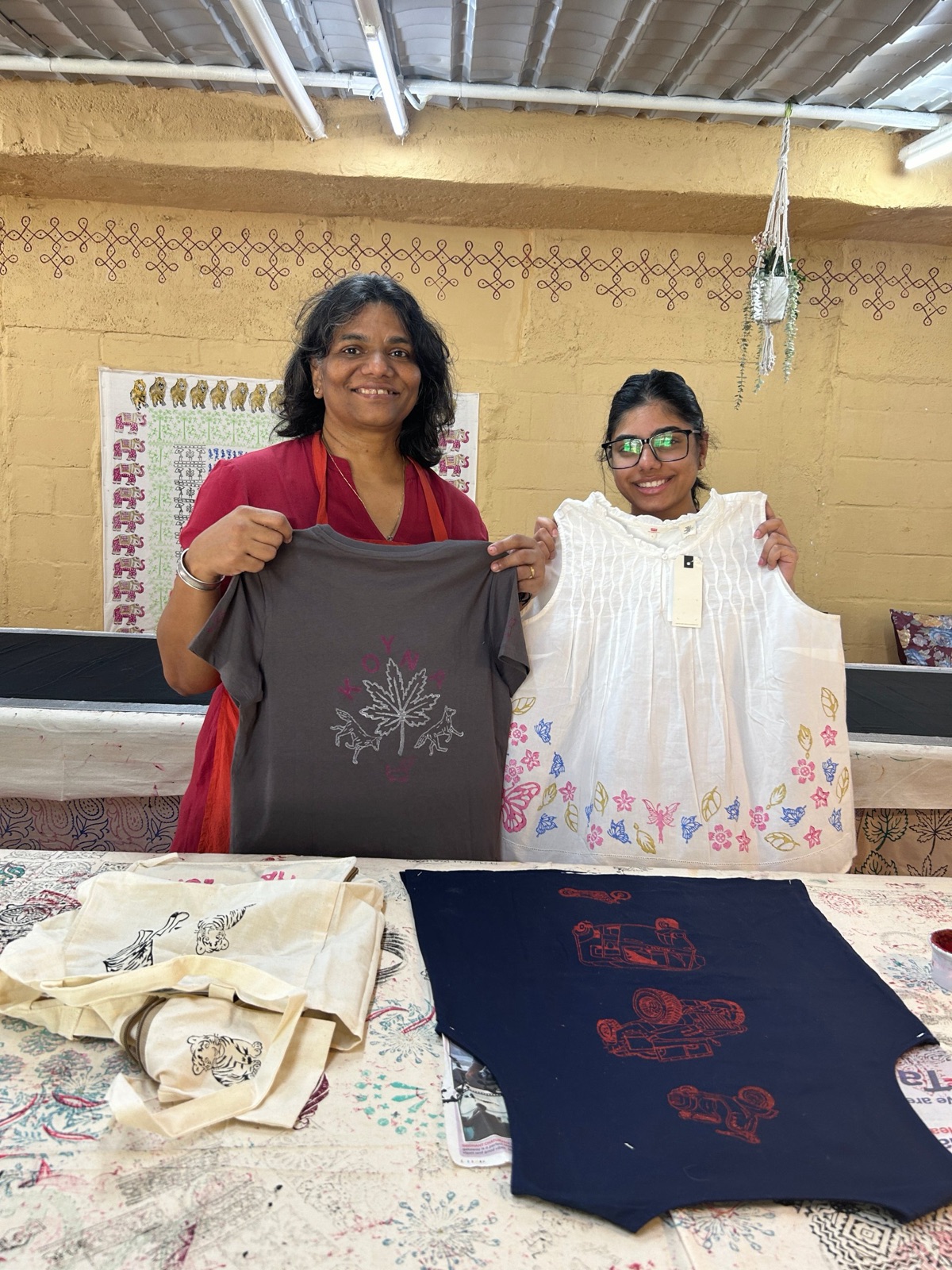
5. Your own clothes. If you have brought a T-shirt, kurta or scarf, you print that too.
You take everything you print home with you. Our guide to caring for block printed fabric explains how to dry and wash it.
The blocks
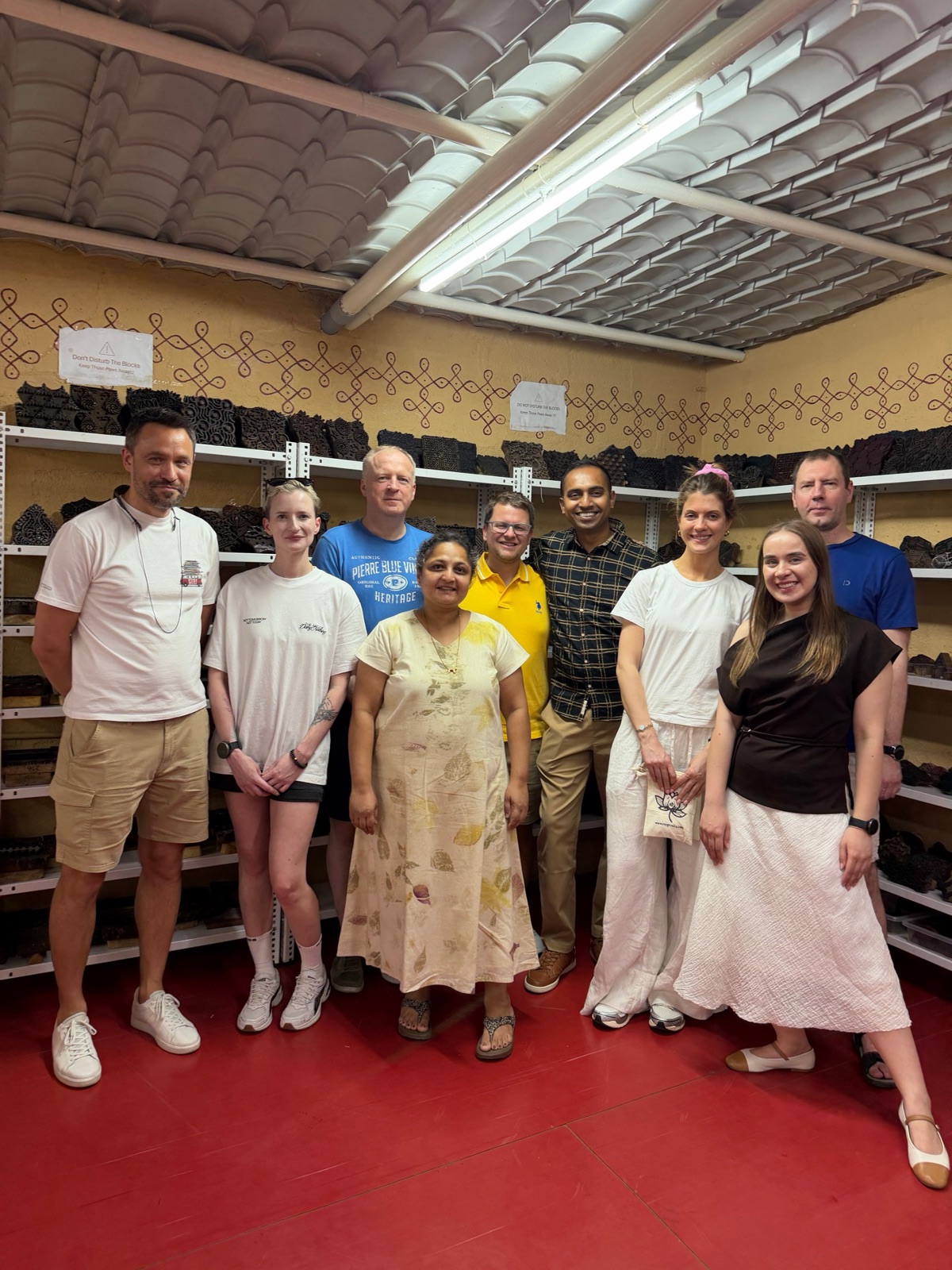
Shelves of hand-carved wooden blocks line the studio walls, and choosing is half the fun. Each block is carved in relief, so the raised surface takes the colour and the cut-away parts stay clean. Small blocks are good for borders and repeats. Larger blocks make a single bold motif.
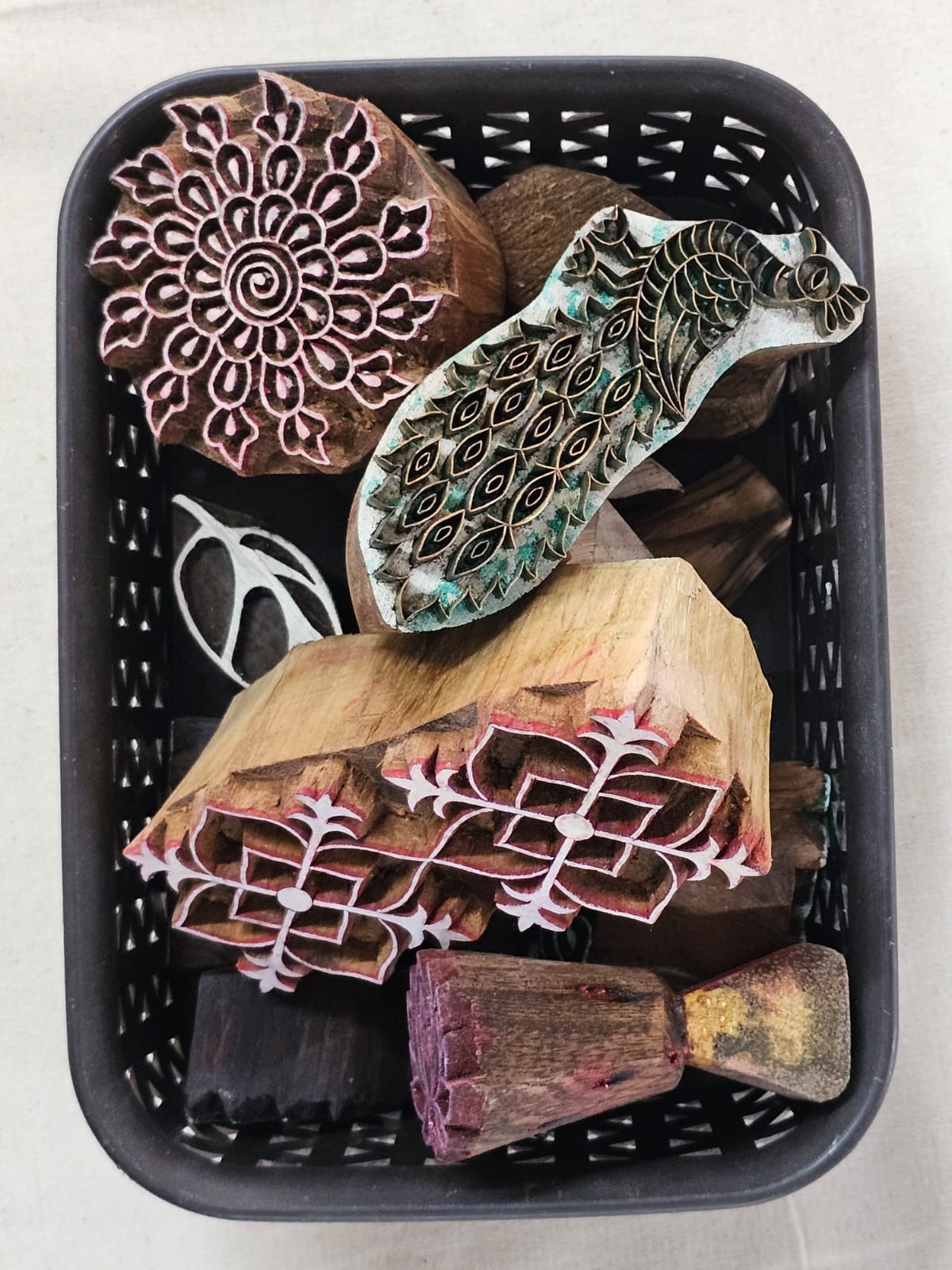
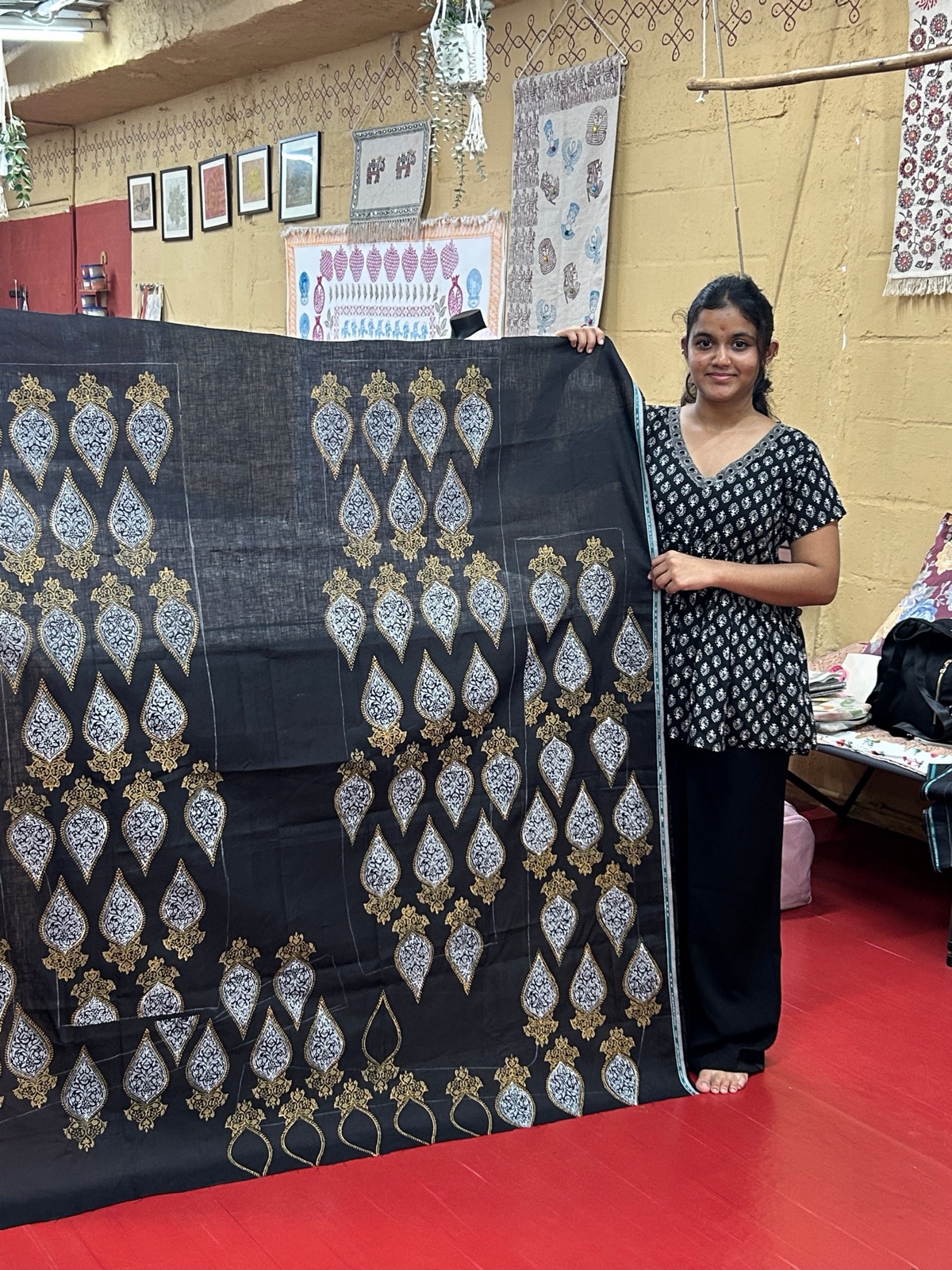
Blocks can also be made to order. Ankita, a fashion design student, worked with us to develop custom blocks for her graduation collection: "From developing custom blocks to guiding me through the block printing process, their support, craftsmanship, and openness to experimentation made the journey truly special." Design colleges bring their students too, and we have hosted a workshop for students from NIFT Kannur.
Bring your own clothes (BYOC)
We encourage everyone to bring something of their own to print. It's the best souvenir, and it gives a pre-loved garment a second life. That's why BYOC is part of our sustainability commitment. Booking listings for the workshop allow up to three items per person. A few tips:
- Natural fibres print best. Cotton, linen and khadi take colour well. Heavy synthetics tend to resist it.
- Wash it first. New clothes carry a finish from the mill that can stop the colour from soaking in.
- Light colours show the print. Prints show most clearly on white, cream and pastels. On dark fabric, ask us about lighter colours.
- Flat is easier. T-shirts, tote bags, scarves and cushion covers are easier to print than anything with lots of seams.
Joelma, from Brazil, used her session to print T-shirts and trousers: "It was new experience creating new T-shirt and Pant designs."
Who comes to the workshop
Most sessions are a mix of people. Some are Bengaluru locals looking for a weekend workshop, some are friends celebrating something together, and some are families with children. Many are travellers who want a hands-on cultural experience in Bangalore.
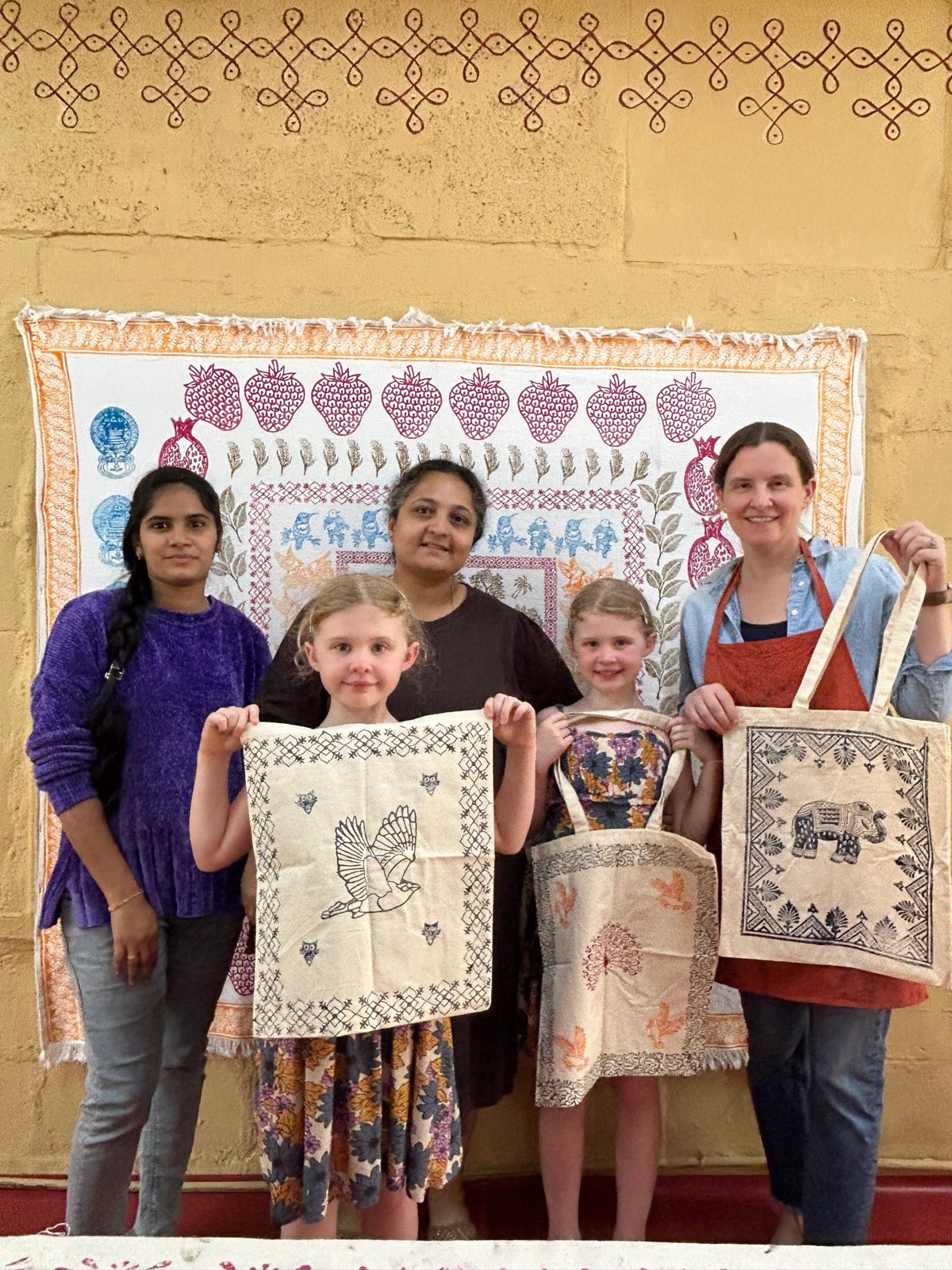
A few words from people who have printed with us:
- "I really loved the workshop. I made a couple of pieces. Lots of blocks to choose from. Fabulous colours to use. The staff were very welcoming." — Janie, New Zealand
- "Great experience. Really lovely people who are passionate about the craft." — Penny, Australia
- "Our group of 8 had a fantastic, three-hour session. Padmashree was a wonderful teacher, walking us through the process from scratch and giving great historical and cultural context." — Prahlad, Bengaluru
- "It was amazing to learn the art of block printing and create such beautiful handcrafted bags." — Neera, Bengaluru
If you're visiting Bangalore
The studio is a short walk from Doddakalasandra Metro on the Namma Metro Green Line. That makes it easy to reach from the city centre without negotiating traffic. It sits inside the Shankaraa Foundation, an arts campus on Kanakapura Main Road. Find us on Google Maps.
Travellers can also book through Expedia, though booking directly with us is the simplest way to choose a time. Printed cotton folds flat, so your tote and clothes fit easily in a suitcase. Just let the colour dry fully before you pack it.
Block printing vs screen printing
People often ask how the two differ:
- How the design is made: block printing uses a carved wooden block, while screen printing pushes ink through a stencil stretched on a mesh screen.
- How it is printed: a block is pressed by hand, one repeat at a time. A screen covers a large area in one pull of a squeegee.
- How it looks: hand block prints have small, charming variations between repeats. Screen prints are flatter and more uniform.
- Which suits a beginner: blocks. You can make a finished, good-looking piece in your first hour, and you can see exactly where each motif lands.
Other workshops at RangMudra
- Eco printing: prints made with leaves and flowers instead of blocks. Read our guide to the eco printing workshop in Bangalore, or book the 3-hour eco printing workshop.
- For companies: we run the same craft as a team activity at your office or our studio. See corporate team building in Bangalore.
- All options: browse every experience workshop or the full workshops page.
If you'd rather own a piece than make one, our hand block printed table runners and cushion covers are printed in the same studio.
Frequently asked questions
Do I need any art experience? No. The workshop is designed for complete beginners. Most people have never held a printing block before.
Can children join? Yes, with a parent. Tell us their ages when you book so we can plan the session.
What should I wear? Comfortable clothes you don't mind getting a little colour on.
Can I bring my own fabric? Yes, please do. Natural fibres that have been washed once work best.
Can we come as a group? Yes. Friends and families often book together. Send us your date and group size and we'll suggest a format.
How do I book? Message us on WhatsApp, use the enquiry form, or book the block printing workshop from its page.