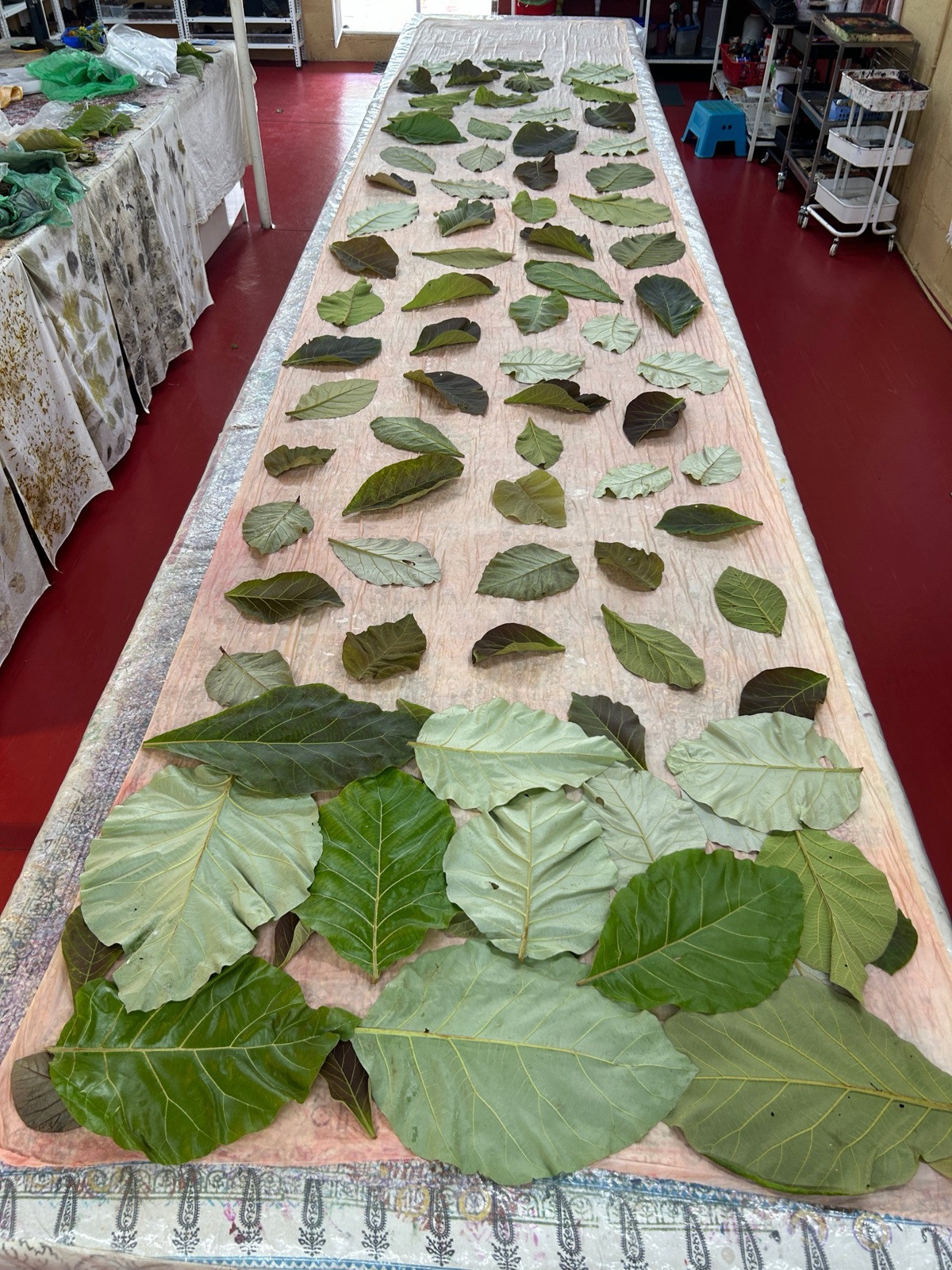
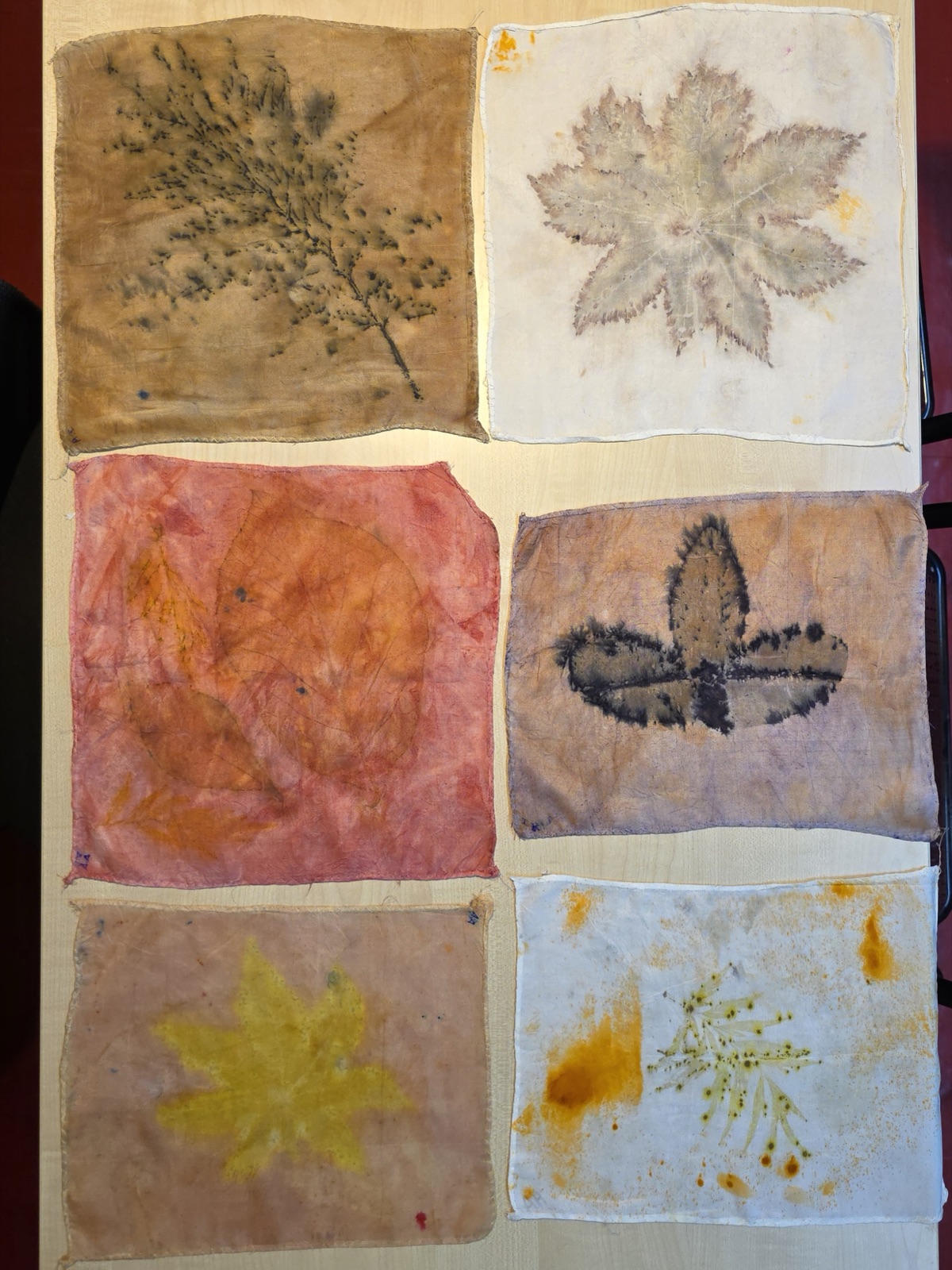
Eco printing is a surface-design technique in which the pigments and tannins of leaves, flowers and bark transfer directly onto cloth through moisture, heat and pressure. Nothing is wasted and nothing is forced: the plant decides what shows. This guide walks you through a first bundle at home, using leaves you can find around Bengaluru. To learn it hands-on, join our eco printing workshop in Bangalore.
What you'll need
- A natural-fibre cloth. Silk is the easiest place to start, because protein fibres (silk, wool) take plant colour readily. Cotton and linen work too, but need more preparation.
- A mordant. In the studio we mostly use aluminium acetate. Iron acetate gives darker, moodier prints.
- Fresh leaves and flowers. Around Bengaluru, try silver oak, castor, teak, Indian almond, eucalyptus, gulmohar, marigold petals and cosmos. These are the plants behind most of our own pieces (see our Bengaluru leaf atlas).
- String or heat-resistant rubber bands, to bind the bundle.
- A wooden dowel or smooth rod, and a large lidded pot with a steamer.
- Gloves.
A safety note: keep the pot, steamer and tools you use for mordants only for dyeing. Don't cook food in them afterwards.
Step 1: Prepare the cloth
Wash the fabric first to remove any factory finish, which can block colour. Then soak it in your mordant bath and let it stay damp. Damp cloth draws the plant colour in better than dry cloth.
Step 2: Lay out your leaves
Lay the damp cloth flat. Arrange the leaves face-down in the pattern you'd like to see. The prints will be soft and painterly, never perfectly mirrored. Overlapping leaves create depth. A single leaf with space around it gives a crisp silhouette.
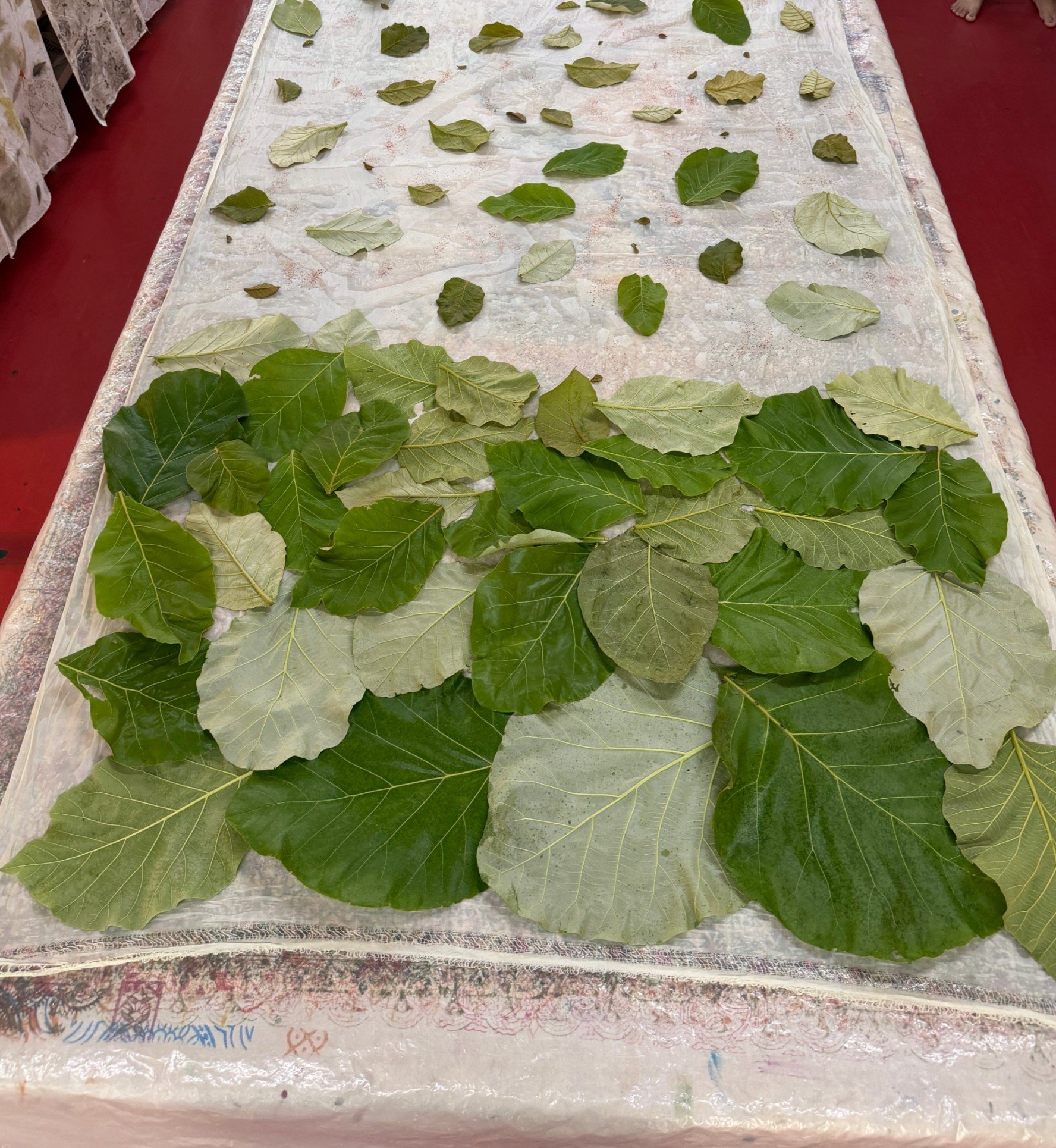
Step 3: Roll and bind
Roll the cloth tightly around the dowel, then bind it firmly with string. The tighter the bundle, the crisper the print. A loose bundle lets steam move the pigment around and blurs the edges.
Step 4: Steam
Steam the bundle for 60–90 minutes, then let it cool overnight before you unroll it. The reveal is the best moment. Every print is a one-of-a-kind conversation between the plant and the cloth.
Step 5: Rest, then rinse
Shake off the leaves and let the cloth dry fully. Give it a few days to rest before its first gentle rinse in cold water. After that, care for it like any naturally dyed fabric. Our care guide covers washing, drying and storage.
When a print doesn't come out
- Blurry edges: the bundle was too loose, or the cloth was too wet. Roll tighter and squeeze out excess water.
- Very faint prints: the leaf may be low in colour this season, or the cloth wasn't mordanted. Try another plant, or switch to iron for more contrast.
- Dark patches everywhere: too much iron. Use less, or try aluminium acetate.
A note on patience
Eco printing rewards the slow practitioner. Some bundles print boldly; others whisper. The same tree prints differently in the monsoon than in the dry months. There are no failures here, only conversations with the season.
Learn it in the studio
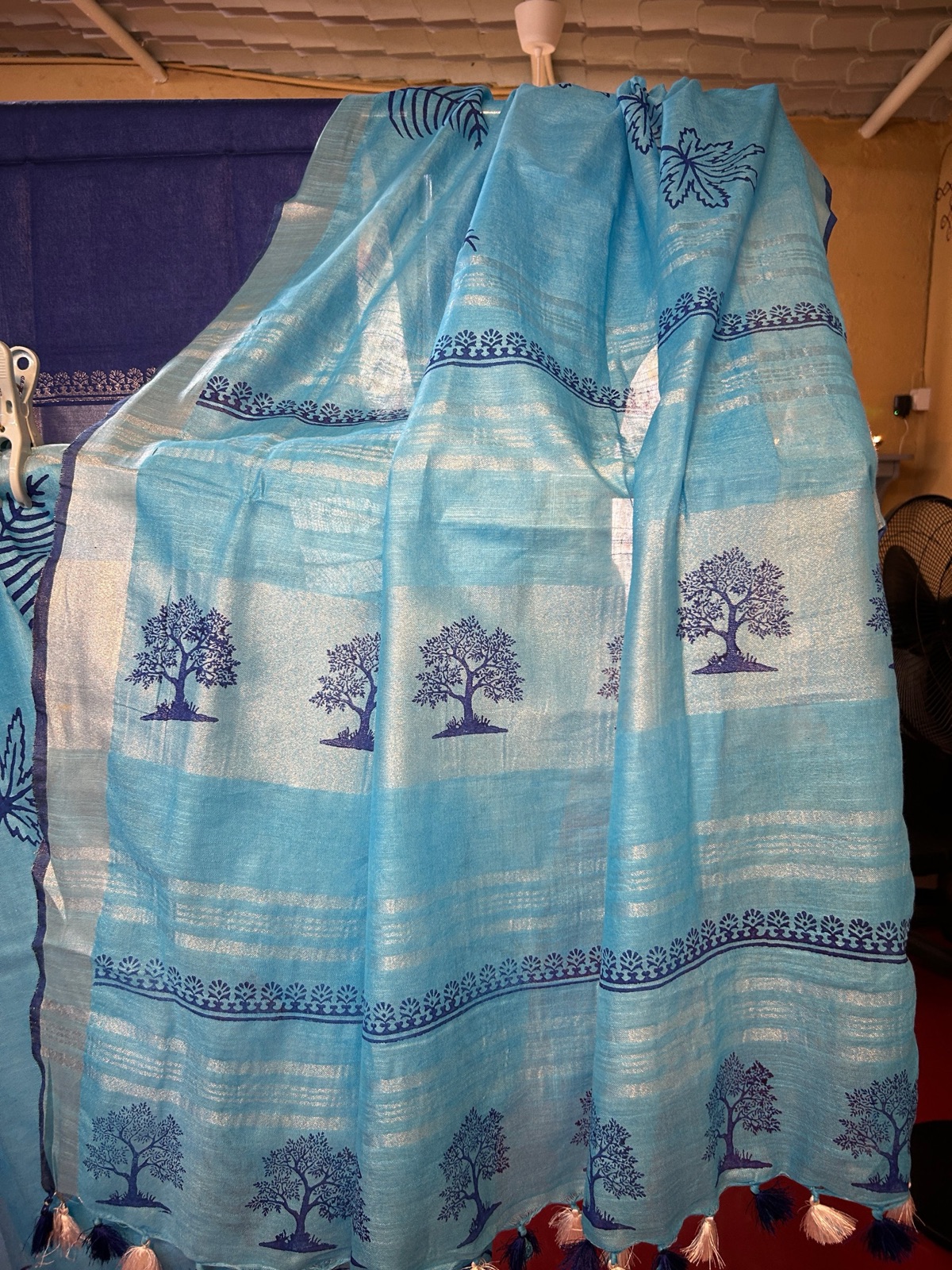
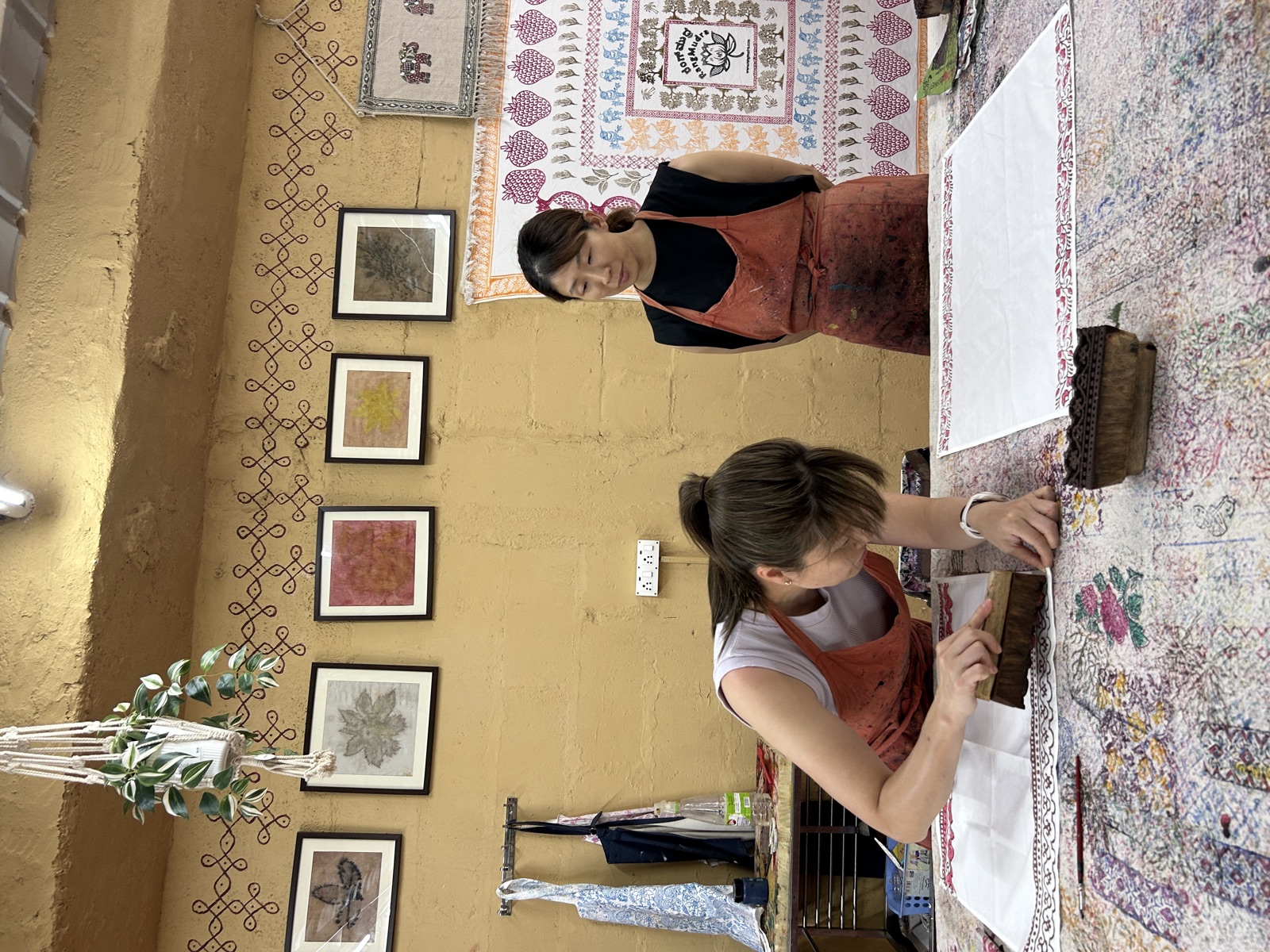
If you'd like guidance on your first piece, our 3-hour eco printing workshop provides the silk, the mordant and the season's leaves. Or see what eco printing looks like as a finished garment in our eco printed silk stoles and silk sarees. Prefer carved blocks to leaves? Read about our block printing workshop in Bangalore.